The ‘it’s just a hot flush’ myth

Why menopause should be a topic of conversation for everyone!

I haven’t written anything on here for a year – which I am disappointed about. Not least because it genuinely is a cathartic thing to do. Today I felt like I wanted to capture some thoughts on a topic that I – now – feel like I want to talk about, and champion. The menopause.

A bit of a taboo subject I know and I debated whether to share this here so publicly, but when you feel that the dialogue needs to be louder on a topic that many will shy away from, I figured it might help.

It’s something I now feel hugely passionate about and I hope that sharing my recent experience will help others, especially in the workplace. A post shared here on LinkedIn by one of my marketing crew, is so important to so many, and not just women. Employers, men, friends, partners all need to be aware of the impact that menopause can have on women. After all, it happens to half of the population. Many of you will know that I work at PwC and our work at PwC on this topic has been brilliant in its recognition of what this means for men and women in the workplace.

I mean who wants to talk about periods?

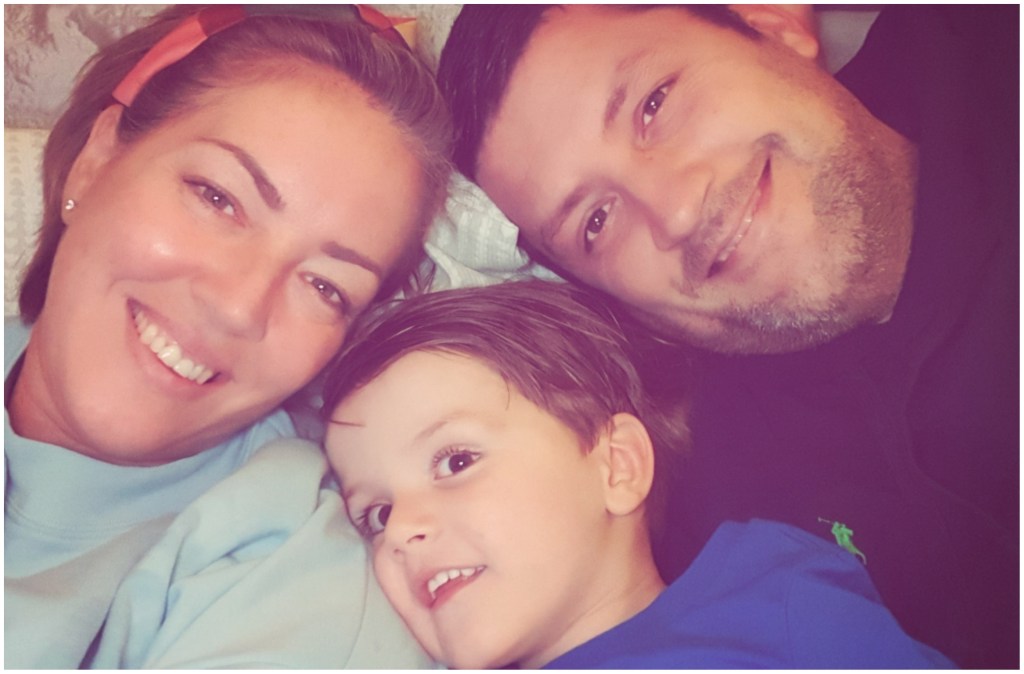
I get that for some people this topic is a little taboo, I mean who wants to openly talk about periods right? But this is so much more than a hot flush or two and the time of the month. The reason this is important to me is because without the work that my colleagues and team mates at PwC have done to talk about this topic, I would never have known I was smack bang in the middle of menopause. It sounds strange to say that out loud and of course I debated sharing this so publicly, but I genuinely feel grateful for the answers I now have in what was an extremely unnerving time for me – and has to be said, for my husband too.

What do I mean by unnerving? If I’m honest I hadn’t been feeling ‘myself’ for around three years. Maybe longer. But I put what I was experiencing down to having had a child at 40 years old, (I’m nearly 46 now). Baby brain. Tired from trying to have a career, a young son, a marriage, a home. All the things that women tell themselves. But it was when I started to google ‘early dementia signs’ on a regular basis that I knew something was off.

Am I losing my mind?

I often joked with my husband that I would lose things before I’d even had a chance to. That I couldn’t remember a simple list of groceries. That I would feel worried or anxious about something very simple. And now he and I both look back and realise this was something that I coped with, or on some occasions didn’t cope with, for a long time, but hid well. It was also something that we now realise could have resulted in the breakdown of our marriage too, but thankfully didn’t. So you see, this is more than just a hot flush!

What triggered my trip to the GP was some pain I’d been having in my shoulder, neck and chest and some heart palpitations that were getting pretty regular and debilitating. I hadn’t shared this with anyone really, not even Stu. I also hadn’t really considered menopause despite a whole host of other symptoms that I’d kind of laughed off if I’m honest. Even when I was off work and I confided in a few people, their first reaction was “is work too much, do you feel stressed” and I guess I was there too. But it’s so easy to blame work and dive right into “it must be stress”. I love what I do, and yes I take my leadership and team responsibilities seriously, and it’s a place I thrive – but when the thing I loved also became tough because I couldn’t remember what I’d agreed, or names of people, or even how to do what I do best, I knew something else must be going on.

You’re not just stressed

A wonderfully considerate GP, a bunch of tests and a few weeks off work to see what was going on, found that while there were things to rectify, my blood tests showed I was in menopause. And very much so. To quote my doctor and the menopause specialist I have spoken to since “it’s no wonder you’ve felt like you couldn’t function”. My memory loss was really worrying me. Even just recently telling one of my team that my husband worked for a Bank that he hadn’t worked at in over ten years – and in the background Stu looking at me with a really puzzled face! The weight gain came very quickly. The achey joints. Itchy skin. Low concentration. The thinning hair. Anxiety in scenarios that never used to phase me. Insomnia. Worrying I would drop the ball at work. At times – and I know I can be dramatic – I honestly felt like I was losing my mind. But I ploughed on just thinking this was life and I’m sure so many other women do the same.

Did you know that there could be more than a million women with menopausal symptoms that feel like they can’t continue in their work because of the lack of support they are getting, both from their employer and their GP. A million women? “A poll of 2,000 women currently experiencing menopause or premenopausal symptoms across the UK, commissioned by Koru Kids, found 18 per cent were looking to leave their jobs because of their symptoms. Koru Kids estimates there are at least 5.87 million women of menopausal or premenopausal age currently working in the UK – extrapolated from data from the Office for National Statistics – meaning that at least 1,057,000 woman could be looking to quit because of their symptoms”. People Management January 2022

Isn’t that astounding? But I can see how this can happen. I am very fortunate to work for an employer that takes these issues seriously. I had a few weeks off to assess what might be going on health wise and came away discovering something entirely different. And I admit, when the doctor told me that my FSH levels were off the scale, I cried. Not because I was worried but because I was so relieved. I genuinely felt like I was slowly going crazy and my doctor told me she hears so many women say the same thing. I’d finally discovered what was going on. Yet to think that initially when I saw a private male GP, he told me to go onto antidepressants despite me not articulating symptoms related to clinical depression – this is a very common occurrence. Antidepressants help with clinical depression of course, but they are not the answer to menopause.

There are brilliant resources that can help

I have since found such a brilliant list of resources that have helped me understand the menopause, the power of HRT (Hormone Replacement Therapy) in giving women their lives back (albeit I appreciate not everyone can take HRT) and how many women fly under the radar for fear of the stigma attached to this topic. If you haven’t heard of Dr Louise Newson, she is “paving the way for evidence-based care, treatment for women during peri-menopause and menopause”. The balance app has been invaluable for me and I encourage others who haven’t discovered this yet to give it a try. More importantly, HRT can be a live saver and I don’t say that lightly.

If you think about being diagnosed with a disease like diabetes or having thyroid problems, both hormone related, you are given medication to address the hormone deficiency or hormones lost. HRT should be afforded the same importance. Yet many GPs will not give it to women experiencing symptoms. I know it won’t be the answer for everyone or indeed the answer as a standalone, but for so many women it will help them feel like they can get back what they’ve lost. Because it can feel like you have lost part of who you were – and maybe then we won’t see this impact women in the workplace either.

I’m very early on in this journey and I’m sure there will be a lot that I learn as I go. I hope that by sharing my experience, and one I hid for a while for fear of what people might say, it can go some way towards ending the stigma surrounding menopause. All I know is that for the first time in a long time I feel a huge sense of hope, not just for me personally (I’m praying HRT works just so I can remember where my husband actually works), but also for other women who have been suffering in silence for way too long.

Let’s continually remind people that this topic matters and people need to know that menopause is more than just a hot flush!
When the storm gets rough

Remembering that it’s ok to not always be ok.

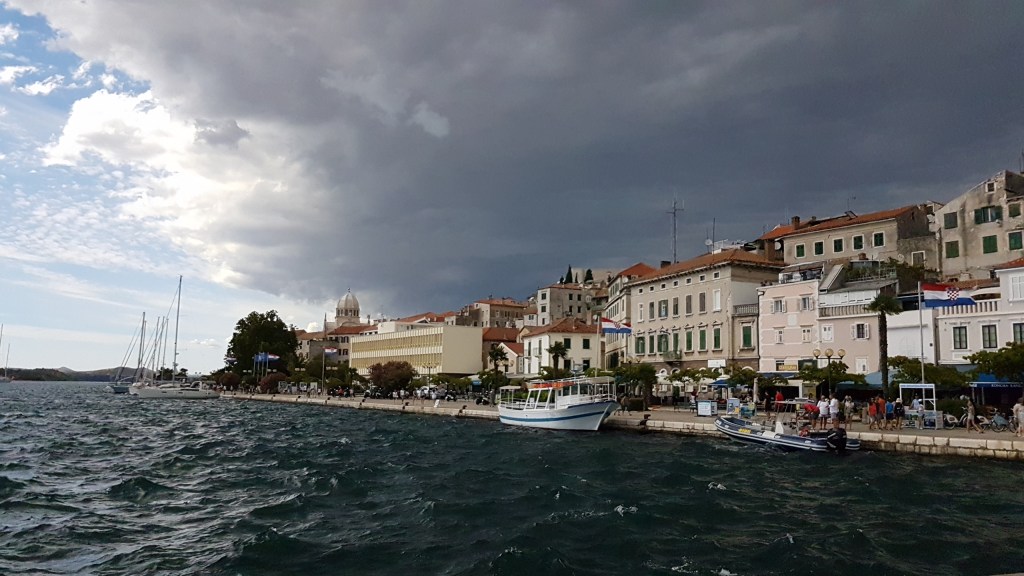
Hi there, it’s been a while hasn’t it? September was the last time I posted on here and that was a huge milestone for us as Sammy started school. Since then, so much has happened – lockdowns, more lockdowns, a cancelled Christmas, vaccinations, elections (am so thankful Trump has gone), the list goes on. I genuinely didn’t expect us to be here nearly a year on. The storm has certainly raged over that time. 

I heard a phrase early on in the first lockdown in March last year which has stuck with me. So many people said that we were all in the ‘same boat’ – but actually we’re not. In the same storm yes absolutely, but not everyone has the same boat. Some have luxury yachts, while others are struggling to keep a dinghy afloat.  And that is the reality. The storm too can rage for people in different ways, some pass through it, taking each day as it comes. Others really find the monotony of life tough to handle. 

“Being lucky doesn’t mean that it can’t feel tough too”

I felt really hopeful last autumn that this thing that has held us to ransom for the last year, might start to leave us alone. But now as we head into February half term (yep, I’m now that person that talks in school terms), I have a 4 year old at home, again, and the juggle is absolutely real. I am clinging onto the fact that he might be able to go back to school in March, so at least work life can feel more tolerable. There is some light relief somewhere in all of this though. If I tell you that just this last week Sammy joined me on a virtual call with one of my teammates Claire, so that he could show her his herbivore and carnivore dinosaur roars, it wouldn’t be a joke. Now, it certainly gave Claire and I a much needed giggle, but there are also days when I just want to shout. Loudly. I don’t have a reason, I’m lucky and I realise I’m lucky. But being lucky doesn’t mean that it can’t feel tough too.

It felt tough last week, I hit a wall. Full pelt. Head on. I remember thinking that I couldn’t remember what my old life felt like. I questioned my marriage, my work, myself. I have since chatted to friends, work colleagues and Stu and the world already feels very different. The power of talking and teaming are very important for me. But for that moment, that week, it felt bloody hard. I know that this wall presented itself as a result of a very full on and emotional few weeks that preceded. You see, as a marketing team, we were grieving. I was grieving.

“The days and weeks after were heavy”

We’d lost our friend and teammate Jack in January in very tragic circumstances. It floored us all. Our sadness and heartache extended to Liz, also in our team and Jack’s partner. Hands down one of the toughest phone calls I have had to take. The days and weeks after that, including the day he was laid to rest this week, were heavy. There is no manual for this type of thing and so you just operate on gut instinct – well, that’s what I did I guess. Your priority is getting arms around the team, but in a way that doesn’t feel like a corporate boilerplate. For me, I simply had to be me. Show them that I too felt their pain. I hope that they knew very early on from the tears they saw me openly shed, that we are all human. 

There was a fleeting moment where I questioned the tears. Is this what ‘the boss’ should be doing in front of her team – our crew as I love to call us. There is a stigma that too often surrounds this concept of leadership and a stiff upper lip. Leadership for me is not about a corporate manual or org charts. It’s about a dialogue between one person and another. It is human and real. I knew very early on when I took this role, that I was going to be me. I wear my heart on my sleeve. I am passionate. And above all else, I care. Being anything other than me would have felt dishonest to me and to the team. You will never please everyone, I understand that, but being authentic will see you a long way.

“Just be yourself and do your best”

People will always have a view of what you should or shouldn’t do, and when faced with that quandary I will always remember a great bit of advice I once heard from that wise man, my Dad – “Don’t worry Bella, just be yourself and do your best” and whenever there is a day when even being yourself and doing your best feels too hard, just remember it’s ok not to feel ok.

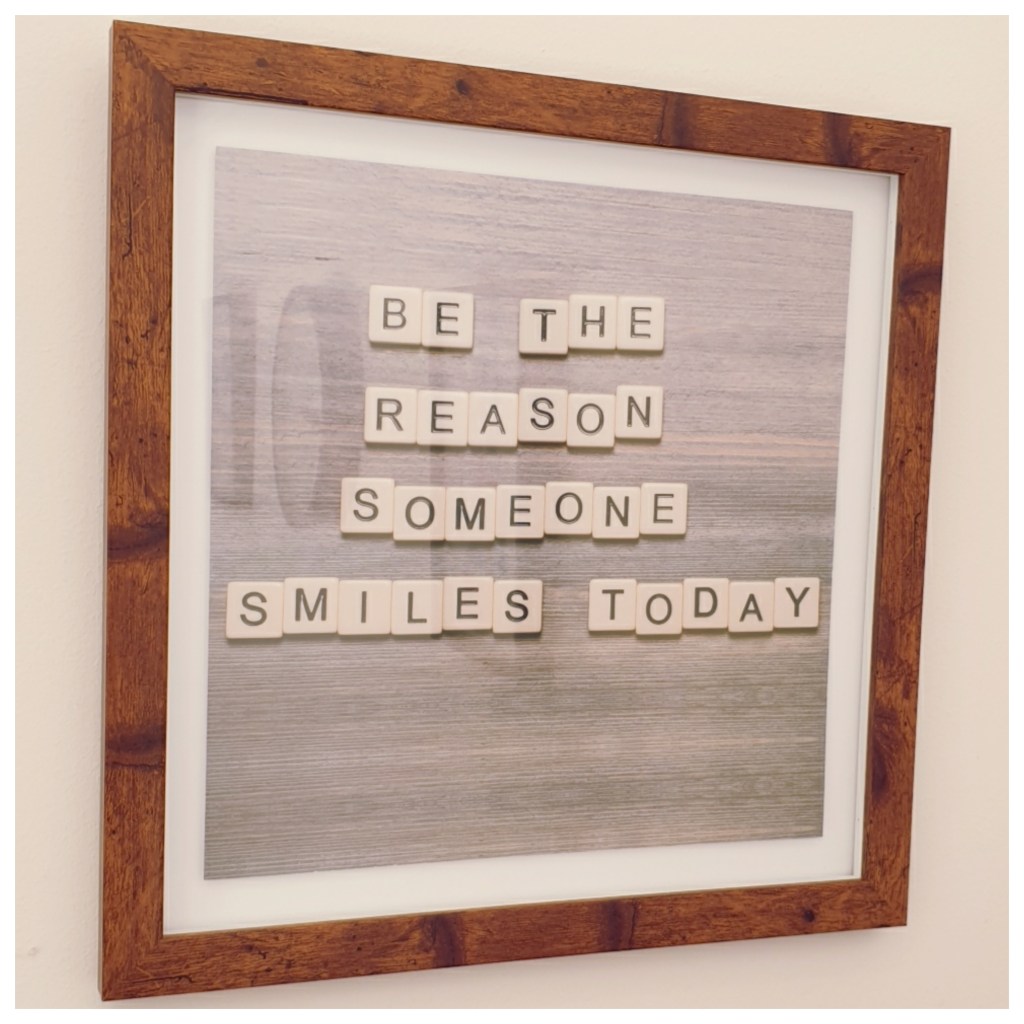
‘Be the reason someone smiles today’

People always remember how you made them feel.

This picture hangs in my office at home and in this Mental Health Awareness week, it reminded me of the importance of our behaviour in the workplace and the impact it can have on others.

I’m a big advocate for looking after our mental as well as our physical health but admit that on occasion I probably don’t give ‘me’ the time and relevant MOT checks I probably should. I did a Psychology related degree (it was actually Psychology and Criminology but that’s for another day) and have always been interested in what makes people tick. I’m an over thinker by my own admission but love the differences in people and how they behave. This has helped me in the workplace by approaching each person as an individual.

Supporting others at work

I’m lucky that I work for an employer that places great emphasis on supporting individuals and their mental health and we regularly see internal and external campaigns on this topic, even supported by Board members. And the workplace is one of the places where I think we should all be a little more aware of others and how they feel. Be kind. Be considerate. That doesn’t mean accepting bad behaviour or under-performance for example, but even in those cases, be a human being.

Maya Angelou once said “I’ve learned that people will forget what you said, people will forget what did, but people will never forget how you made them feel”. I can really relate to this. I’m sure that we all have off days where we are grumpy or take our woes out on others, but by accepting that each of us has the potential to impact how someone else feels, means that we could all do with checking ourselves occasionally, especially at work, where we spend a lot of our time.

People are important

I’ve been in various roles over the last 20 years and more recently I have had the privilege of leading great teams. Every single person in those teams is as important as the next and each of them bring something to the table, irrespective of the project or challenge we face. As I have grown in my role, I have received coaching, mentoring and not just from those more senior either, and I learn something new all the time from the people I work with. Taking each of those small things that we learn and observe in others, can help ensure that we ‘check ourselves’ when thinking about the feelings of others. Here are a few things I’ve learned along the way:

‘Thank you’ – it’s so simple isn’t it? But how many times do you forget to say it? I really value when my boss says thank you. In any shape or form, for something simple or complex, it makes me feel motivated. I feel like I have been noticed. That evening when you worked late. The time you dropped everything to do another powerpoint deck (we love a deck), or when that amazing PA found you a meeting room with 7 minutes to spare. I try to say thank you, as often as I can, to all the great guys and gals I get to work with in my role. It’s important to call out great delivery, or going above and beyond, or simply just doing what they needed to do – even if included dropping everything for another deck! Make sure people hear it too – as individuals or as a team. An email. On a call. When you bump into them in the lift. In a tweet. In the pub. Wherever. But say it, because it has the power to change someone’s day.

‘We, not I’ – I think the worst thing in the world is when someone takes the glory for the work that has been done by many. That’s rubbish! When has anything ever really been done by one person. I call this out a lot. ‘We not I’ is important to me. So many roles require others to help us do what we do, and I can’t do my job without the amazing people I work with. Leaders can lead. Designers can design. Writers can write. But there is always someone in a shape or form, there to help them do it. I try to instil this in others too. A reminder when someone else should have been on the email chain, or in the launch comm. Trying to use this approach to role model to others. Using this philosophy when the great results achieved on a thing that I am down as the ‘leader’ on, are showcased with everyone involved at the heart of it . The importance of team and collaboration in making others feel valued is key for me.

‘Slow down’ – finally, if like me, you run at a million miles an hour; remember that not everyone can run at your pace. Slow down. Who wants to feel like they can’t catch up or that they need to operate like you do. I find people are often really receptive to being told to slow down, me included. And yes they need reminding sometimes, but definitely tell them. Then they can adapt their approach to make you feel part of the journey (I hate that word, so I promise not to ‘journey’ too much in this blog).  I was once mentored by a lovely woman called Becky (she will know who she is if she reads this) and she taught me something really valuable. Now, do I always stick to it? No, probably not, and I am definitely improving; but I try to send less emails in the evening. So what, I hear you say. She told me that sending emails late, especially to those more junior, can make them feel like they have to reply. Putting them under pressure. It’s true. I feel it myself occasionally. So now, I send emails in the evening to those I know are expecting something or will be online late because that pattern works for them, but I tend to draft my emails and then send first thing.

Now I’m not saying that me not sending a late email or using the term ‘we’ in all my team meetings brings out the smiles in everyone – that’s not what I mean and I’d definitely need to get over myself if I did! I guess I’m saying think of others. Adapt, to help others. Do the little things that you know will make even the tiniest difference to one person. No, of course we won’t be able to do it all the time – the proverbial hits the fan occasionally – but a few little things, could mean that you’re ‘the reason someone smiles today’.

However, there is, of course, always a really easy way to make someone smile, in or out of the workplace – cake! Works every time.

Mental Health Awareness Week 18-24 May 2020

www.mind.org.uk

www.headstogether.org.uk

www.samaritans.org